Zati for immigration-law boutiques
Give the missing-evidence brief a team, and keep the legal call with your attorney
Zati is a workspace for organizing AI workers into a team you direct. For an immigration-law boutique, a practical first responsibility to configure is the one your staff often carry: turning an approved checklist and permitted intake material into a brief that states what is missing, where the evidence came from, and who acts next. Start with that result, then build the organization around it.
Begin with the responsibility your team carries
The intake packet that arrives incomplete. The checklist item nobody can confirm. The client waiting on a document request that has to be precise.
Choose one responsibility: preparing the missing-evidence brief. Define what a useful result looks like before you assign it. Specify which material the worker may read, which checklist applies, and what the output must contain. The goal is a brief your case team can act on, not a filing and not a form answer.
Define the result you expect
Picture one matter with an approved intake export, an attorney-approved checklist, and the correspondence your staff already collected.
- A research worker's assignment: compare the checklist against the supplied material and return each item with its source, its status, and any conflicting information.
- A drafting worker's assignment: turn the confirmed gaps into a document-request message using your approved language, and list the questions the client still has to answer.
- A reviewing worker's assignment: check the draft against your brief, flag any claim that cannot be traced to the reviewed material, and mark what needs attorney confirmation.
- Your decision: the attorney decides what is legally sufficient, what must be requested, and what goes to the client.
That is a concrete starting configuration: named responsibilities, inspectable output, one clear point for human judgment.
See the team behind the brief
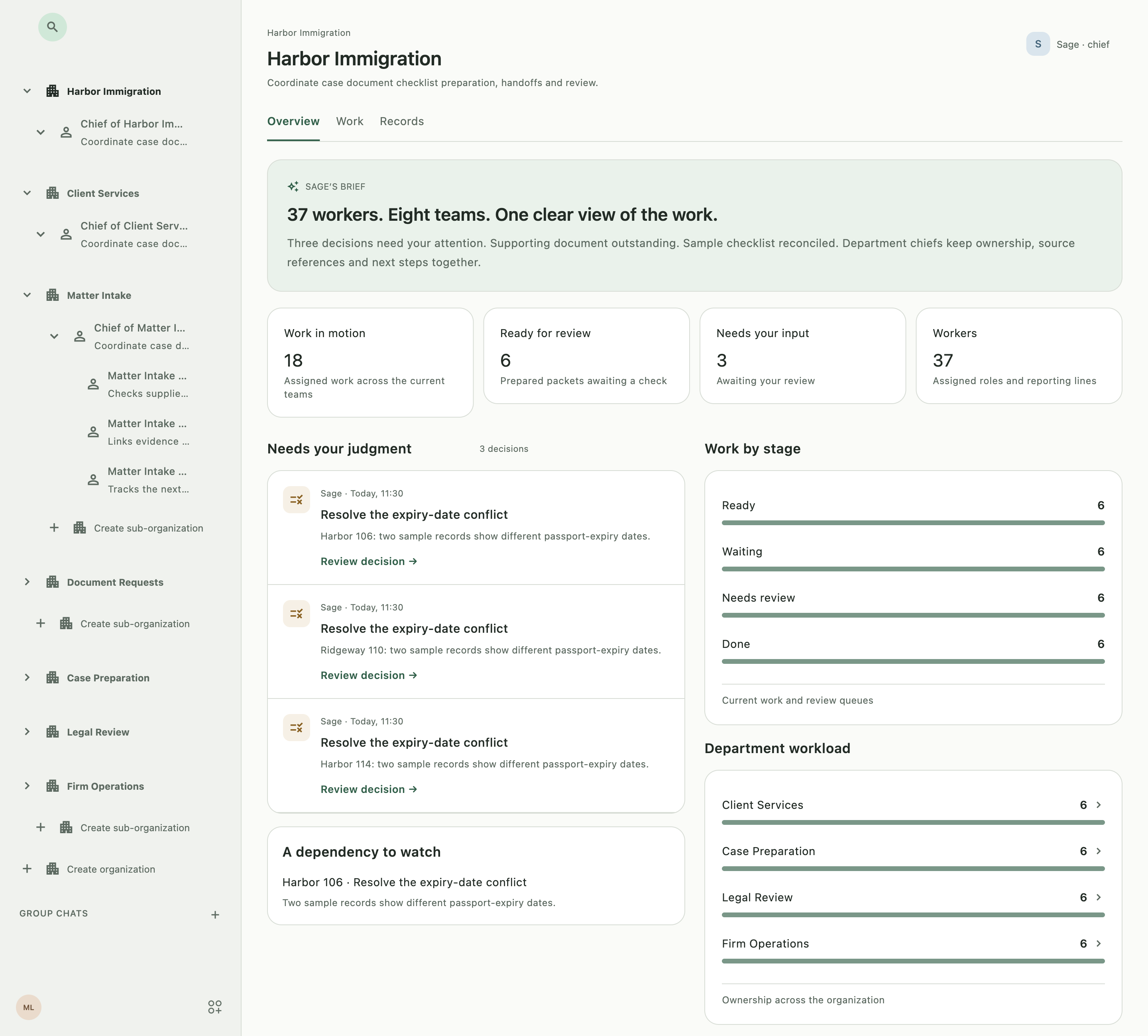
Keep workers, conversations, assignments and files in one organizational workspace. Give workers names, purposes, instructions and reporting managers that match how your practice already works. A chief can coordinate; specialists can hold focused assignments.
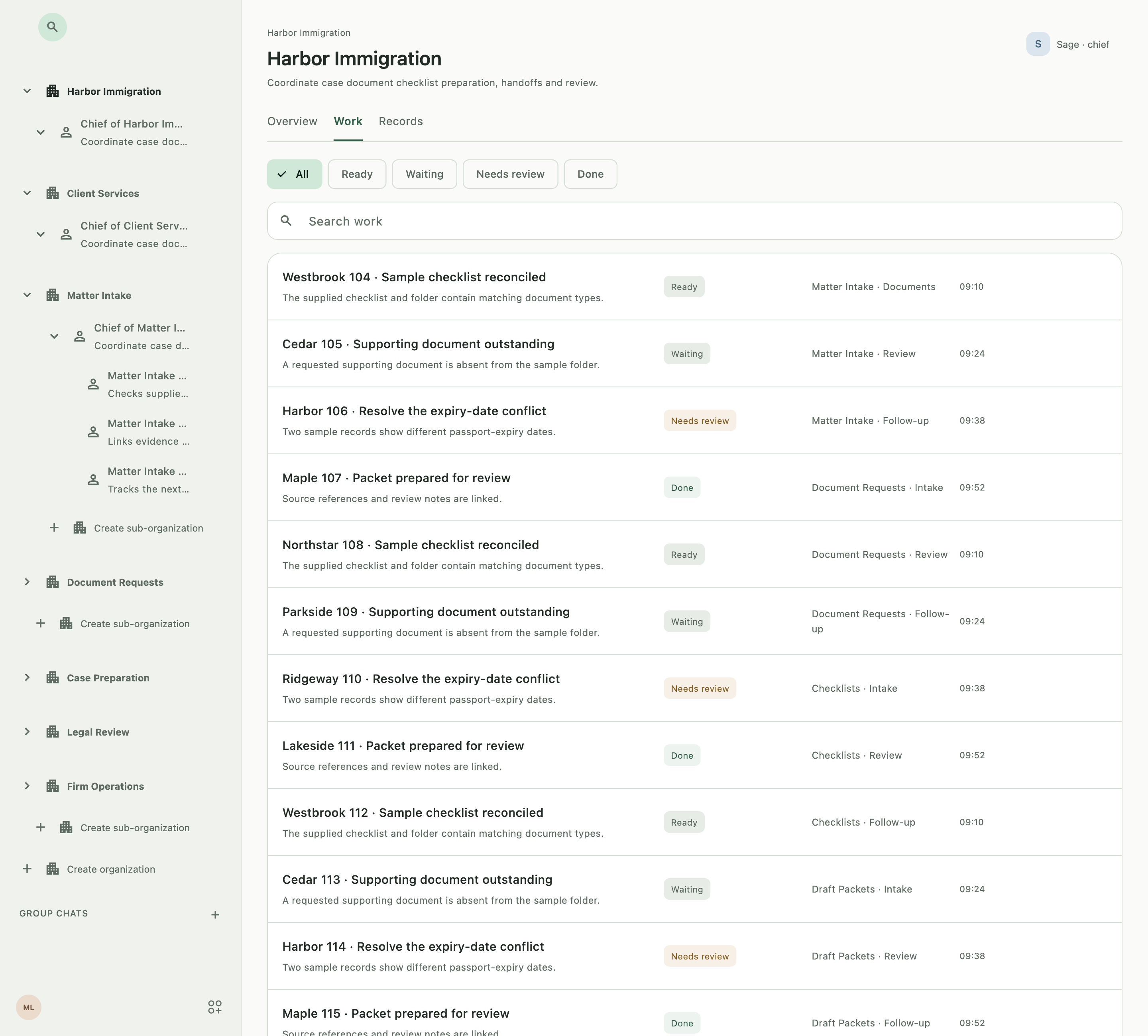
The captured workspace shows the shape of this: thirteen organization units, eight teams, thirty-seven workers across four reporting levels, and twenty-four work items visible in the Overview and Work views.
Make the important decisions explicit
Set the access, permissions and resource limits for the work you configure. Decide what needs review and who makes the call. Exact-action reviews, human-required decisions and standing approvals let a worker prepare while a person still authorizes.
Your case-management and document systems keep the matter records and their rules. Begin with approved supplied material; connected access depends on supported capabilities and permission. For a client request, the worker drafts and the designated reviewer approves before anything is sent.
Build around the practice
Once the brief is reliable, add the next responsibility: an internal handoff list that shows unresolved inputs, responsible staff and proposed next steps. Reporting, operations and research teams can follow, each with its own acceptance criteria.
Questions before you start
Do we need a large AI organization?
Start with the smallest team that makes one responsibility clear. Add roles when the work gives you a reason.
Will it work with our case-management system?
Bring your current tools and workflow to the call. We will assess the connections, access and outputs your setup would need.
What should we bring?
One recurring responsibility, an example of its inputs, and the result you want to see. No client records are needed for that first conversation.
Choose the first responsibility to hand over
Bring a checklist workflow. We will map the workers, the review step and the handoff it should support.